
Light and Fluffy Vanilla Sponge Cake Recipe for Everyday Baking
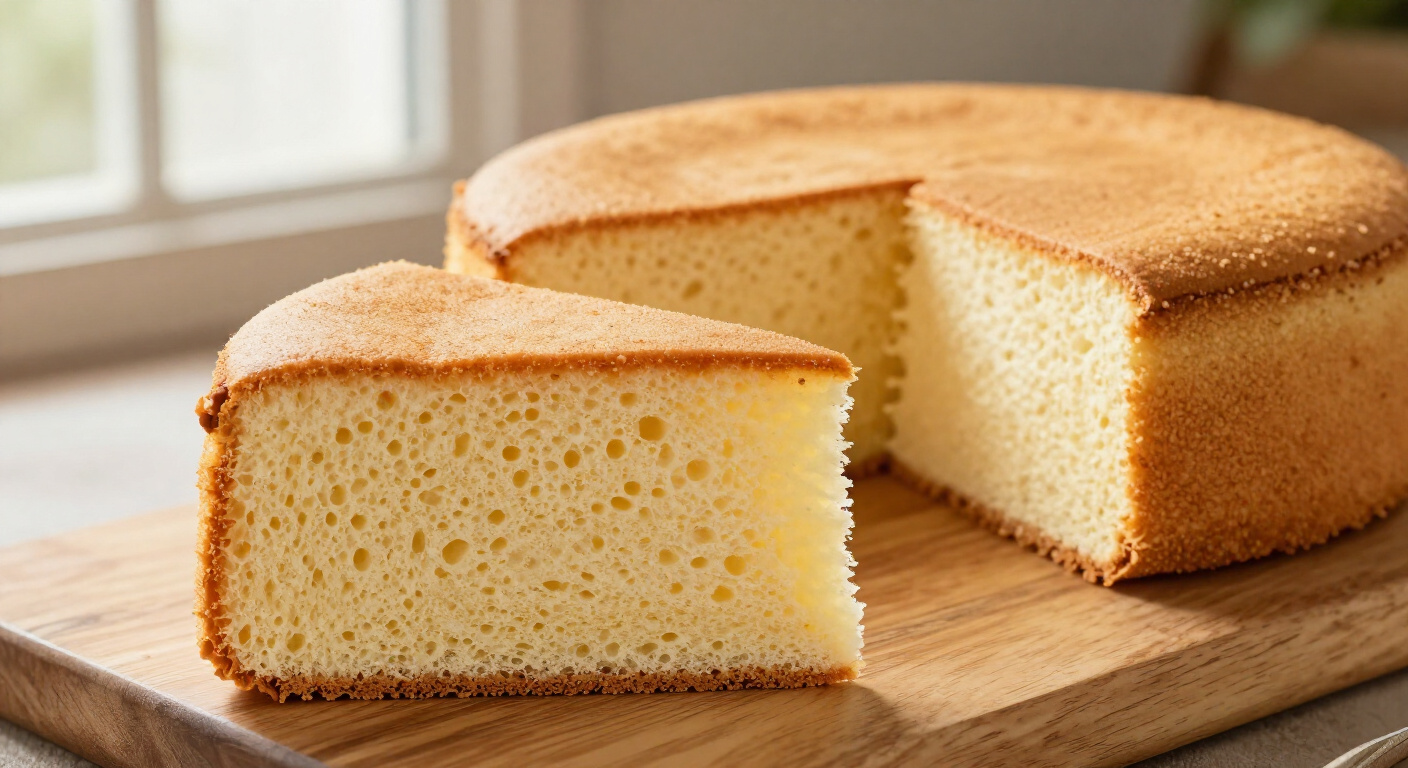
This sponge cake recipe bakes a golden, feather-light vanilla cake in 45 minutes using just eggs, sugar and flour. Perfect for layering and celebrating.
This sponge cake recipe bakes up golden-brown, feather-light and fragrant with vanilla in just 45 minutes, lifted by whisked eggs alone. It's my forgiving everyday base for birthday layers, Sunday tea or any day that needs a little celebrating.
Warming the eggs and sugar over simmering water melts every grain, building a sturdier, silkier foam. Folding twice-sifted flour in three gentle additions keeps those precious bubbles intact.
Ingredients You'll Need
Large Eggs: Eggs are the only lift this sponge gets, so they do all the heavy work. Room-temperature eggs whip into a pale, billowy foam that cold eggs just can't match. No real substitute here, but if you only have medium eggs, use five instead of four.
Caster Sugar: Caster sugar is superfine, so it melts quickly into the warm eggs without gritty grains. It sweetens, stabilises the foam and gives the crust that gentle golden-brown blush. Can't find it? Pulse regular granulated sugar in a blender for 20 seconds.
Plain Flour: This is the soft structure that holds every bubble in place once baked. Sifting it twice makes it airy, so it drifts into the foam instead of landing in heavy clumps. For an even more tender crumb, swap in cake flour gram for gram.
Fine Salt: Just a whisper of salt, but it wakes up the vanilla and balances the sweetness. Without it the cake tastes flat, almost like it's holding its breath. Fine sea salt works perfectly. Use a tiny pinch of flaky salt crushed between your fingers if that's all you have.
Pure Vanilla Extract: Vanilla is the warm, fragrant heart of this vanilla sponge cake. It goes in at the very end of beating, so its perfume stays bright and sweet. Vanilla bean paste is a lovely swap, used in the same amount, with pretty little specks.
Unsalted Butter: A small splash of melted, cooled butter adds richness and keeps the crumb moist for days. Extra soft butter greases the pan, so your sponge releases cleanly every single time. Salted butter works in a pinch. Just skip the added salt.


How to Make It (Step by Step)
It all comes down to air: warm and whip the eggs into a pale foam, fold gently, then bake golden.
Even if you've never whisked a ribbon before, your first homemade sponge will rise tall and tender.

- Brush an 8-inch (20 cm) round cake pan with soft butter, line the base with parchment, and preheat the oven. Wait until the oven is fully hot and the pan looks evenly glossy, 10-15 minutes at 350°F / 175°C. A ready pan means your batter never sits around losing air.

- Whisk the room-temperature eggs and caster sugar in a heatproof bowl set over barely simmering water. Keep whisking until the mixture feels warm and no sugar grains remain, 4-5 minutes at 110°F / 43°C. Rub a drop between your fingers. Smooth means you're ready.

- Lift the bowl off the heat and beat on high with an electric mixer. Beat until the foam turns pale ivory and triples in volume, 6-8 minutes at room temperature (70°F / 21°C). Add the vanilla in the last 30 seconds. A ribbon should sit on top for three seconds. This is the heart of every light sponge cake recipe.

- Sift the twice-sifted flour and fine salt over the foam in three additions. Fold gently with a wide spatula until no dry pockets remain, 2-3 minutes at room temperature (70°F / 21°C). Cut down the middle, sweep along the bottom, turn the bowl. Slow and patient wins here.

- Stir a large scoop of batter into the cooled melted butter, then fold it back into the bowl. Fold until the batter looks glossy with no butter streaks, about 1 minute with butter at 90°F / 32°C. Warm butter is fine. Hot butter sinks your bubbles.

- Pour the batter into the prepared pan from a low height. Tilt gently to level it, then tap once on the counter. The surface should look smooth and even, under 1 minute at room temperature (70°F / 21°C). Get it straight into the oven.

- Bake on the middle rack until the top turns even golden-brown and springs back when pressed, 22-25 minutes at 350°F / 175°C. The edges will start pulling from the pan. Don't open the door before 20 minutes. I know it's hard.

- Cool the sponge in its pan for 10 minutes, then run a knife around the edge. Turn it onto a wire rack and peel off the parchment. Let it cool until the crumb feels springy and fully cold, about 1 hour at room temperature (70°F / 21°C). Your homemade sponge cake is ready to fill and layer.

Wrap the cold sponge tightly and it keeps three days at room temperature, or freezes beautifully for two months. Bake it a day ahead for cleaner, tidier slicing.
Serving size: 1 portion · Calories: 210 · Total Fat: 7g · Saturated Fat: 4g · Carbs: 30g · Fiber: 0.4g · Sugar: 16g · Protein: 5g · Sodium: 75mg
Tips and Tricks
- Equipment: Use a light-coloured, straight-sided 8-inch pan: Pale aluminium bakes gently and evenly. Dark pans can over-brown the edges before the centre sets. Straight sides help the sponge climb tall and level.
- Temperature precision: Clip on a thermometer at 110°F / 43°C: Warm enough to melt every sugar grain, cool enough to keep the eggs silky. Go much hotter and they start to scramble at the edges.
- Common mistake: Stopping the whisk too early: A foam that looks fluffy isn't always ready. Keep beating until it's pale ivory and the ribbon holds for three full seconds. Under-whipped foam bakes into a flat, dense sponge.

- Flavour upgrade: Add finely grated lemon zest: Fold a teaspoon in with the vanilla. It brightens the sweetness and smells like sunshine. It's lovely under a jam-and-cream filling.
- Texture tip: Fold with a wide spatula and a light hand: Big, slow strokes keep the bubbles alive. Cut down the middle, sweep the bottom, turn the bowl. You'll get a soft, springy, feather-light crumb.

Frequently Asked Questions
Can I make this sponge cake recipe gluten-free and still keep it light?
Yes, replace the 120 grams plain flour with 100 grams gluten-free plain flour blend plus 20 grams cornflour, sifted together three times. The whisked eggs do all the lifting, so it still rises tall, but fold extra gently because the crumb is more delicate.
How should I store a filled sponge cake, and can I freeze leftover slices?
A cream- or fruit-filled sponge keeps up to 2 days in an airtight container in the fridge, and unfilled leftover slices, individually wrapped, freeze for up to 1 month. Thaw slices still wrapped at room temperature for an hour, or microwave 10 seconds to soften.
Why did my sponge cake sink in the middle and turn dense?
Usually the foam was underwhipped or the hot butter knocked out the air, so beat until a ribbon holds for three seconds and keep the butter around 90°F / 32°C. Also keep the oven door closed for the first 20 minutes, and bake until the centre springs back when pressed.
What to Serve With This
- Macerated Strawberries: Juicy, sugar-slicked berries add a bright, tangy burst that wakes up the soft, vanilla-scented crumb.
- Tangy Lemon Curd: Its sharp, buttery zing cuts through the sweetness and gives each airy forkful a silky contrast.
- Softly Whipped Cream: Cool, pillowy cream melts into the springy sponge and makes every bite feel like a hug.
- Hot Earl Grey Tea: Fragrant bergamot and a gentle tannic edge balance the cake's mellow sweetness, just like a proper Sunday tea.

Light and Fluffy Vanilla Sponge Cake Recipe for Everyday Baking
Dessert / British
- Prep
- 20 min
- Cook
- 25 min
- Total
- 45 min
- Servings
- 8
- Calories
- 210 kcal
Ingredients
- 4 large eggs, at room temperature
- 120 grams (⅔ cup) caster sugar
- 120 grams (1 cup) plain flour, sifted twice
- ⅛ teaspoon fine salt
- 1½ teaspoons pure vanilla extract
- 30 grams (2 tablespoons) unsalted butter, melted and cooled, plus extra for greasing the pan
Instructions
- Brush an 8-inch (20 cm) round cake pan with soft butter, line the base with parchment, and preheat the oven. Wait until the oven is fully hot and the pan looks evenly glossy, 10-15 minutes at 350°F / 175°C. A ready pan means your batter never sits around losing air.
- Whisk the room-temperature eggs and caster sugar in a heatproof bowl set over barely simmering water. Keep whisking until the mixture feels warm and no sugar grains remain, 4-5 minutes at 110°F / 43°C. Rub a drop between your fingers. Smooth means you're ready.
- Lift the bowl off the heat and beat on high with an electric mixer. Beat until the foam turns pale ivory and triples in volume, 6-8 minutes at room temperature (70°F / 21°C). Add the vanilla in the last 30 seconds. A ribbon should sit on top for three seconds. This is the heart of every light sponge cake recipe.
- Sift the twice-sifted flour and fine salt over the foam in three additions. Fold gently with a wide spatula until no dry pockets remain, 2-3 minutes at room temperature (70°F / 21°C). Cut down the middle, sweep along the bottom, turn the bowl. Slow and patient wins here.
- Stir a large scoop of batter into the cooled melted butter, then fold it back into the bowl. Fold until the batter looks glossy with no butter streaks, about 1 minute with butter at 90°F / 32°C. Warm butter is fine. Hot butter sinks your bubbles.
- Pour the batter into the prepared pan from a low height. Tilt gently to level it, then tap once on the counter. The surface should look smooth and even, under 1 minute at room temperature (70°F / 21°C). Get it straight into the oven.
- Bake on the middle rack until the top turns even golden-brown and springs back when pressed, 22-25 minutes at 350°F / 175°C. The edges will start pulling from the pan. Don't open the door before 20 minutes. I know it's hard.
- Cool the sponge in its pan for 10 minutes, then run a knife around the edge. Turn it onto a wire rack and peel off the parchment. Let it cool until the crumb feels springy and fully cold, about 1 hour at room temperature (70°F / 21°C). Your homemade sponge cake is ready to fill and layer.
Share this article
About the author
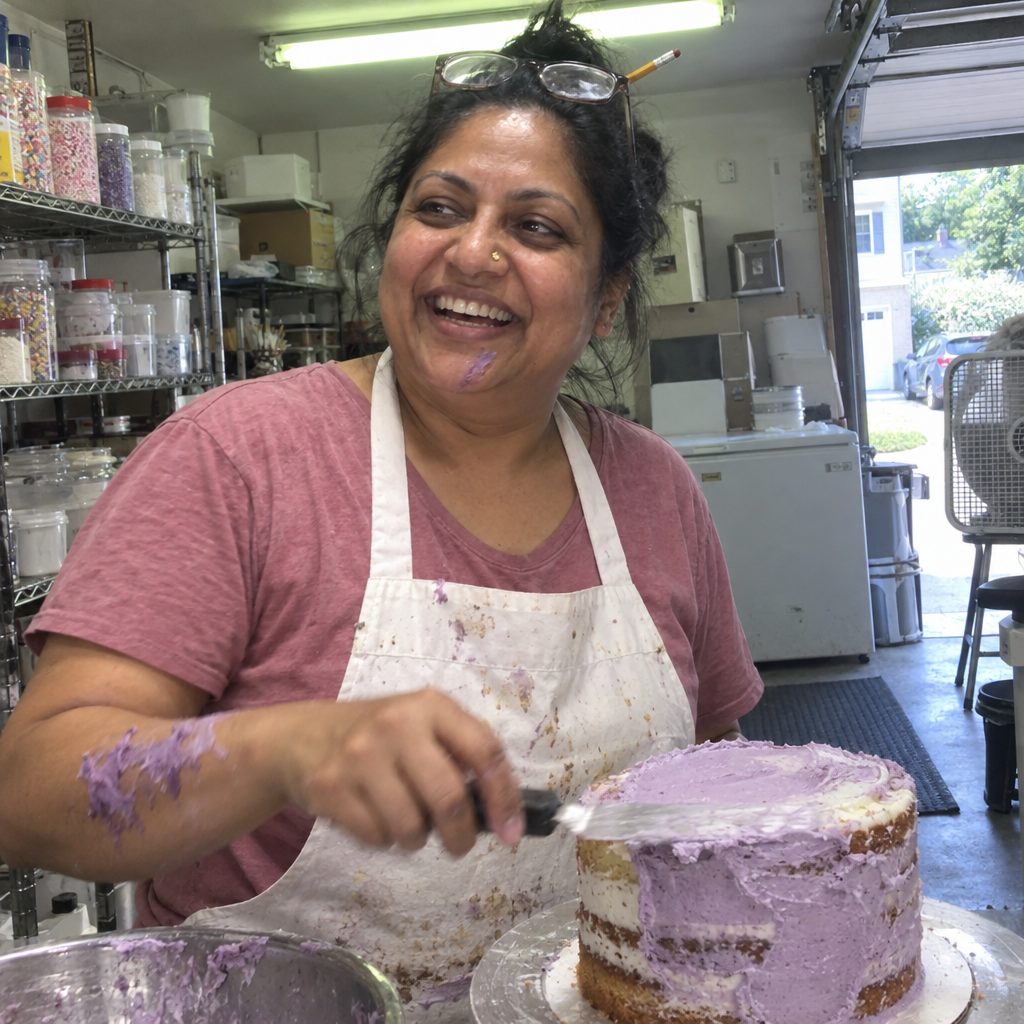
Priya Raman
Priya was told her whole life that a cake business was a silly dream, so she built one in the garage and outlasted every doubter. She still gets a lump in her throat when someone opens a box she made. Layer cakes are how she says the things she was never allowed to say out loud.