
Victoria Sponge Cake: Light Vanilla Sponge with Jam and Cream
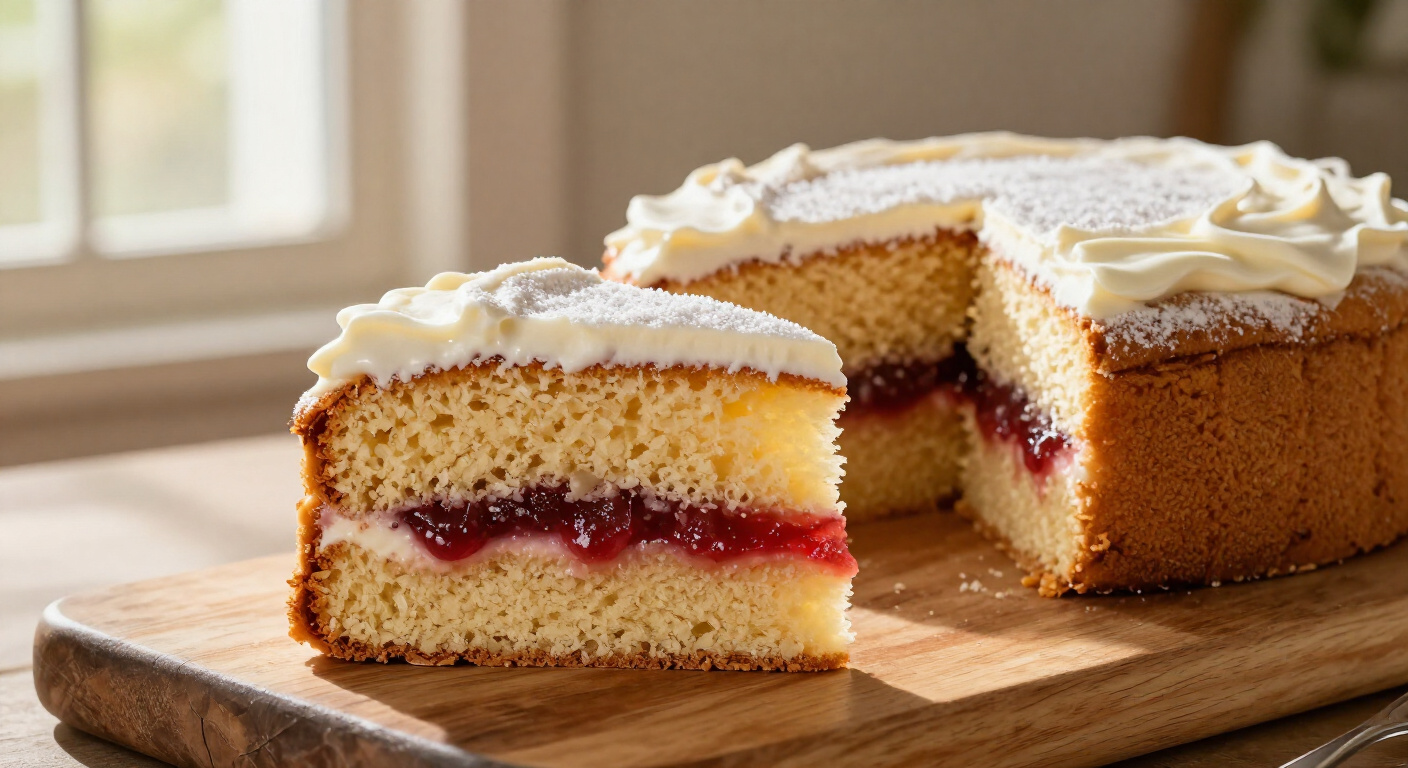
Victoria sponge cake in 40 minutes: two golden, vanilla-scented layers filled with jam and whipped cream. Bake your new afternoon tea favourite today.
Picture a golden-brown victoria sponge cake, fragrant with vanilla and so light it almost melts. In about 40 minutes you get two velvety sponges sandwiched with sweet jam and softly whipped cream. It's my go-to for afternoon tea or any birthday that needs a crowd-pleaser.
Why This Recipe Works
• Cream the butter and sugar thoroughly: Beating softened butter with caster sugar traps tiny air pockets. Those pockets expand in the oven and give the sponge its lift.
• Bring eggs to room temperature first: Cold eggs can make creamed butter seize and curdle. Adding them a little at a time keeps the batter smooth and stable.
• Fold flour with a metal spoon: A metal spoon cuts through the batter without knocking out air. Gentle folding keeps the crumb tender rather than tough.
• Loosen with milk until it drops: Milk adds moisture so the batter reaches a dropping consistency. That texture bakes into an even rise and a moist, springy crumb.
Ingredients You'll Need
Unsalted Butter: This is the soft, rich base of the sponge. Beaten with sugar, it traps the air that lifts the cake. Salted butter works too; just cut back on the fine salt.
Caster Sugar: Caster sugar is finer than granulated, so it dissolves quickly into the butter. Those fine crystals help build the light, fluffy base. Granulated sugar pulsed briefly in a food processor is the best stand-in, though you may need to beat a little longer.
Large Eggs: Eggs bind the batter and add structure, colour and lift. Use them at room temperature and add them slowly so the batter stays smooth. Flax or chia eggs make this sponge denser, so stick with real eggs if you can.
Self-Raising Flour: This soft, low-protein flour gives the sponge its tender crumb. It already contains a raising agent, so the rise stays even. Plain flour plus about 1½ teaspoons baking powder per cup works, though the crumb runs slightly denser.
Baking Powder: This extra raising agent gives the sponge reliable lift in the oven. Mixing it in with the flour spreads it evenly through the batter. Baking soda is not a direct swap, so use fresh baking powder in the same amount.
Vanilla Extract: Vanilla adds warm, fragrant sweetness that makes a plain sponge taste like a celebration. Add it with the eggs so it blends through the batter. Vanilla bean paste works in the same amount.
Whole Milk: Milk loosens the batter to a dropping consistency. It keeps the crumb moist and springy after baking. Semi-skimmed or 2% milk works; the batter will be a touch thinner.
Fine Salt: A tiny pinch of salt sharpens the flavour and balances the sweetness. You'd notice it if it were missing. Table salt works in the same pinch.
Raspberry Jam: Jam is the sweet, fruity layer between the two sponges. Choose a good-quality seedless jam so it spreads smoothly. Strawberry jam is the classic swap, and it's the one I reach for in June.
Double Cream: Double cream is thick, rich cream with a high fat content. It whips into soft, stable peaks that fill the cake with a velvety layer. Heavy cream or whipping cream around 36% fat is the closest swap; chill it well before whipping.
Icing Sugar: Icing sugar is powdered sugar, ground fine enough to dust the top in a clean white layer. Sift it over the cake just before serving so it doesn't soak in. Caster sugar blitzed to a powder in a blender makes a coarser stand-in.


How to Make It (Step by Step)
Victoria sponge cake is a two-tin classic: cream the butter and sugar, fold in the eggs and flour, bake two rounds, then sandwich with jam and cream. Don't worry if you've never layered a cake before, because this one is forgiving and you'll have a gorgeous, golden result on your first try.

- Preheat the oven and grease two sandwich tins with softened butter, lining the bases with baking paper, until the metal looks evenly glossy, 10-15 minutes at 350°F / 180°C.

- Beat the softened butter and caster sugar together with a wooden spoon until pale, fluffy and creamy, 3-4 minutes at room temperature (68°F / 20°C).

- Beat in the lightly beaten eggs a little at a time, then add the vanilla extract, until the batter is smooth and glossy, 2-3 minutes at room temperature (68°F / 20°C).

- Fold in the self-raising flour, baking powder and fine salt with a metal spoon until no dry streaks remain, 1-2 minutes at room temperature (68°F / 20°C).

- Fold in the whole milk until the batter falls heavily from the spoon, 30-60 seconds at room temperature (68°F / 20°C).

- Divide the batter evenly between the two prepared tins and level the tops with a spatula until smooth, 1-2 minutes at room temperature (68°F / 20°C).

- Bake until golden-brown, springy to the touch and evenly risen, 18-22 minutes at 350°F / 180°C.

- Cool the sponges in their tins for 5 minutes, then turn them onto a wire rack until cool to the touch, 45-60 minutes at room temperature (68°F / 20°C).

- Spread the red jam over one sponge, spoon the whipped double cream on top, and press the second sponge on, keeping the cream chilled until soft and airy, 2-3 minutes at 40°F / 4°C.

- Dust the top with icing sugar until an even, fine white layer covers the surface, about 1 minute at room temperature (68°F / 20°C).

Recipe Notes
• Storage: Once filled, keep the cake covered in the fridge for up to 2 days. Unfilled sponges wrap well and freeze for 3 months. Thaw them at room temperature.
• Key substitution: No self-raising flour? Use 225 g plain flour and sift in 2 extra teaspoons of baking powder before folding.
• Make-ahead tip: Bake the sponges up to a day ahead and keep them wrapped at room temperature. Whip and fill the cream just before serving.
• Common mistake: Overwhipping the cream makes it grainy and weepy. Stop at soft peaks, so it spreads smoothly and stays fluffy between the layers.
Serving size: 1 portion · Calories: 330 · Total Fat: 21g · Saturated Fat: 13g · Carbs: 32g · Fiber: 0.5g · Sugar: 19g · Protein: 5g · Sodium: 160mg
Tips and Tricks
- Equipment: Use two matching sandwich tins: Identical tins bake at the same rate, so both sponges rise to the same height. Matching depth also makes stacking neat and easy.

- Temperature precision: Hold steady at 350°F / 180°C: The oven must stay put for the whole bake. Check the sponges at 18 minutes, when they should be golden-brown and springy.
- Common mistake: Opening the oven door early: A blast of cool air drops the temperature mid-rise. The middle can sink, so wait until the minimum bake time before peeking.
- Flavour upgrade: Add lemon zest to the cream: For an optional twist, fold a teaspoon of finely grated lemon zest into the whipped double cream. It brightens the filling and balances the sweet jam.
- Texture tip: Tap the tins before baking: Give each filled tin a gentle tap on the counter. This releases large air bubbles, so the crumb bakes finer, more even and tender.

Frequently Asked Questions
Can I make this victoria sponge cake dairy-free, and what replaces the cream?
Yes, swap the 225 g butter for 225 g firm dairy-free baking spread, the 2 tablespoons whole milk for 2 tablespoons oat milk, and the 300 ml double cream for 300 ml chilled thick coconut cream whipped to soft peaks. Check that your jam label confirms it is dairy-free.
How do I keep leftover slices of victoria sponge from drying out?
Press a sheet of baking paper against the cut edges, then store slices in an airtight container in the fridge for up to 2 days. Let them sit at room temperature for 30 minutes before serving so the sponge softens and the cream loses its chill.
Why did my victoria sponge cake sink or turn out dense in the middle?
The most common cause is underbaking or opening the oven door early, so bake until the centre springs back and a skewer comes out clean. Also check that the butter and sugar were creamed until pale and fluffy, since under-creamed batter won't rise evenly.
What to Serve With This
- Cucumber Tea Sandwiches: Crisp, cool cucumber and tangy cream cheese contrast the soft, buttery sponge beautifully.
- Lemon-Tossed Raspberries: A squeeze of lemon brightens the fruit and cuts through the rich jam and cream.
- Clementine Segments: Juicy, sharp citrus sections refresh your palate between bites of sweet cake.
- Honeyed Greek Yogurt: Thick and tangy, it adds a creamy counterpoint without competing with the sponge.

Victoria Sponge Cake: Light Vanilla Sponge with Jam and Cream
Dessert / British
- Prep
- 20 min
- Cook
- 20 min
- Total
- 40 min
- Servings
- 12
- Calories
- 330 kcal
Ingredients
- 225 g (1 cup / 2 sticks) unsalted butter, softened to room temperature
- 225 g (1 cup) caster sugar
- 4 large eggs, at room temperature, lightly beaten
- 225 g (1¾ cups) self-raising flour
- 1 teaspoon baking powder
- 1 teaspoon vanilla extract
- 2 tablespoons whole milk, at room temperature
- Pinch of fine salt
- 160 g (about ½ cup) good-quality raspberry or strawberry jam
- 300 ml (1¼ cups) double cream, chilled, whipped to soft peaks
- 2 tablespoons icing sugar, for dusting
Instructions
- Preheat the oven and grease two sandwich tins with softened butter, lining the bases with baking paper, until the metal looks evenly glossy, 10-15 minutes at 350°F / 180°C.
- Beat the softened butter and caster sugar together with a wooden spoon until pale, fluffy and creamy, 3-4 minutes at room temperature (68°F / 20°C).
- Beat in the lightly beaten eggs a little at a time, then add the vanilla extract, until the batter is smooth and glossy, 2-3 minutes at room temperature (68°F / 20°C).
- Fold in the self-raising flour, baking powder and fine salt with a metal spoon until no dry streaks remain, 1-2 minutes at room temperature (68°F / 20°C).
- Fold in the whole milk until the batter falls heavily from the spoon, 30-60 seconds at room temperature (68°F / 20°C).
- Divide the batter evenly between the two prepared tins and level the tops with a spatula until smooth, 1-2 minutes at room temperature (68°F / 20°C).
- Bake until golden-brown, springy to the touch and evenly risen, 18-22 minutes at 350°F / 180°C.
- Cool the sponges in their tins for 5 minutes, then turn them onto a wire rack until cool to the touch, 45-60 minutes at room temperature (68°F / 20°C).
- Spread the red jam over one sponge, spoon the whipped double cream on top, and press the second sponge on, keeping the cream chilled until soft and airy, 2-3 minutes at 40°F / 4°C.
- Dust the top with icing sugar until an even, fine white layer covers the surface, about 1 minute at room temperature (68°F / 20°C).
Share this article
About the author

Priya Raman
Priya was told her whole life that a cake business was a silly dream, so she built one in the garage and outlasted every doubter. She still gets a lump in her throat when someone opens a box she made. Layer cakes are how she says the things she was never allowed to say out loud.